


Your inpatient rehabilitation stay will typically last between 5 and 60 days, depending on your specific medical condition and progress. You’ll need to participate in at least 15 hours of therapy weekly, spread across 5 days, while meeting established clinical goals. Medicare guidelines, your insurance coverage, and factors like maturity, initial function, and pre-existing conditions will influence your length of stay. Understanding these key factors can help you prepare for your ideal rehabilitation timeline.
Standard Duration Guidelines for Inpatient Rehabilitation
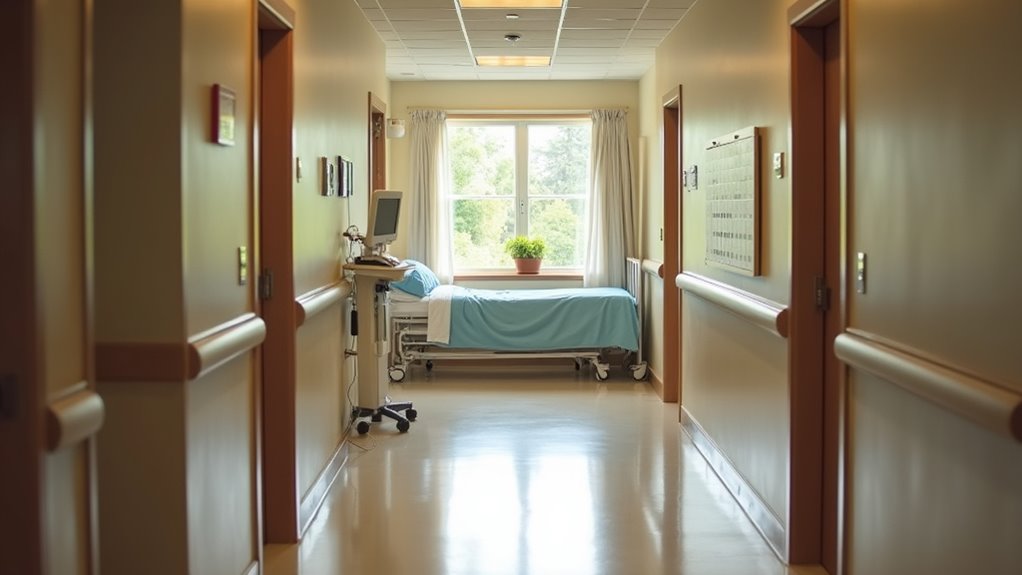
While inpatient rehabilitation facilities (IRFs) typically follow Medicare’s 60-day coverage framework, the actual duration of your stay depends on multiple clinical factors. Most facilities require a minimum 5-day commitment, though you’ll need to demonstrate ongoing progress to justify extended stays.
Your rehabilitation schedule will generally involve 3 hours of therapy daily or 15 hours weekly, but these benchmarks aren’t rigid rules. Instead, your medical team will assess your progress and adjust the intensity based on your individual needs. Treatment plans are delivered by a comprehensive rehabilitation team that includes doctors, nurses, therapists, and social workers.
Beyond the initial 60 days, you may face reimbursement limits or increased out-of-pocket costs, depending on your insurance coverage. It’s crucial to verify your specific coverage terms before admission, as private insurance policies can vary significantly from Medicare guidelines.
Medical Conditions and Length of Stay Requirements
Five primary medical conditions greatly influence inpatient rehabilitation stays and duration requirements. Joint replacement patients typically require shorter stays, though severe osteoarthritis in multiple joints may extend your rehabilitation timeline. The rising global demand for treatment has made optimizing rehabilitation stays increasingly important for healthcare facilities. Patients receiving full therapy time show better consistency in completing their rehabilitation programs. Healthcare providers assess patient progress daily to determine appropriate adjustments to treatment plans.
For stroke patients, boosted therapy can reduce length of stay without compromising functional outcomes, with regional variations affecting duration. Spinal cord injury rehabilitation demonstrates a direct link between therapy time and functional improvement, requiring careful comorbidity management.
Hip fracture and severe osteoarthritis cases demand multidisciplinary collaboration, with pre-rehabilitation health status enormously impacting recovery duration. Traumatic brain injury patients often show better outcomes with increased therapy intensity, though your length of stay may vary based on cognitive and physical deficits requiring specialized treatment protocols.
Factors Affecting Rehabilitation Duration

Multiple factors come into play when determining your length of stay in inpatient rehabilitation. Your age, initial functional status, and number of pre-existing conditions profoundly impact your recovery timeline. Research shows that each 1-point increase in your admission motor FIM score can reduce your stay by approximately 1.1 days. A thorough evaluation of your condition severity helps medical professionals develop the most appropriate treatment duration.
Family dynamics and economic considerations also shape your rehabilitation duration. Your living arrangements, whether you’re alone or with family, influence discharge readiness. Insurance coverage limits and hospital subsidy status affect how long you can receive treatment.
Equally, your cognitive function, emotional stability, and general health status determine therapy intensity and recovery pace. The hospital’s policies, resource allocation, and regional variations in healthcare delivery further impact your length of stay.
Therapy Intensity and Time Requirements
During your inpatient rehabilitation stay, you’ll need to participate in at least 3 hours of therapy per day, typically spread across five days each week to meet the minimum requirement of 15 hours weekly.
If you miss a scheduled session due to medical complications, your therapy team can adjust your schedule to make up missed time within the same week, provided it’s clinically appropriate and safe.
Your daily therapy will combine individual sessions focused on your specific needs with group activities that promote social interaction and peer support, though the exact balance depends on your condition and recovery goals. This comprehensive care approach requires an interdisciplinary team working together to optimize your recovery outcomes.
Your therapy treatment must begin within 36 hours of your admission to ensure timely progression of your rehabilitation program.
For optimal results, your rehabilitation program will be directed and supervised by a Physical Medicine and Rehabilitation (PM&R) physician who coordinates your multidisciplinary care plan.
Daily Therapy Hour Requirements
Intensive therapy serves as the cornerstone of inpatient rehabilitation, with strict requirements mandating at least 3 hours of daily therapy for 5 days each week. Under current treatment guidelines, you’ll need to participate in a minimum of 15 hours of therapy weekly, with most sessions being individualized rather than group-based.
Your daily session limits will typically involve a combination of physical, occupational, and speech therapy, depending on your specific needs. The multi-disciplinary approach ensures comprehensive care through coordinated treatment plans from various healthcare specialists. While you must demonstrate the ability to tolerate these intensive sessions at admission, brief medical exceptions are permitted for acute illness lasting less than three consecutive days.
If you miss any therapy minutes, you’ll need to make them up within the same week to maintain compliance with Medicare requirements and guarantee optimal rehabilitation outcomes.
Making Up Missed Sessions
A rigorous protocol governs how you’ll make up missed therapy sessions during inpatient rehabilitation. When you miss scheduled therapy, your care team must document the exact minutes missed and provide missed session justification, whether it’s due to medical procedures or non-clinical reasons.
Makeup session scheduling follows strict guidelines, with some Medicare Administrative Contractors requiring same-day compensation while others allow a 7-day window. You’ll work with your therapy team to reschedule missed time without compromising your weekly intensity requirements. Your therapy plan should maintain a standard of 3 hours per day of therapy services, delivered at least five days per week. The brief exceptions policy allows for up to three consecutive days of missed therapy with proper documentation. Clinical judgment and medical necessity must be thoroughly documented to support any deviations from standard therapy requirements.
For spinal cord injury patients, missed therapy averages 153 minutes per week during a typical 20-hour stay.
If you miss sessions due to illness or medical procedures, your team will reassess your condition and adjust your therapy plan accordingly, ensuring you maintain progress in the direction of your rehabilitation goals.
Individual vs. Group Balance
Maintaining ideal progress in inpatient rehabilitation requires a careful balance between individual and group therapy sessions. You’ll receive a minimum of 15 hours of therapeutic interventions weekly, with most of your treatment delivered through one-on-one sessions. This individualized approach guarantees optimal skill integration while allowing supplementary group activities for social rehabilitation aspects. Under Medicare Part A coverage, your treatment must require intensive medical care as confirmed by your doctor. Medical necessity determinations should not be based on therapy time thresholds alone.
| Therapy Type | Primary Focus | Time Allocation |
|---|---|---|
| Individual | Direct Care | >50% Required |
| Group | Peer Support | <50% Permitted |
| Concurrent | Shared Time | Supplementary |
Your daily schedule will include 3 hours of therapy across multiple disciplines, typically spread over 5-6 days per week. While group sessions bolster your recovery through peer interaction, they’re carefully limited to confirm you receive the intensive individual attention needed for maximum functional gains.
Progress Monitoring and Goal Achievement Metrics
Three key components drive successful rehabilitation outcomes: detailed progress monitoring, data-driven goal tracking, and standardized performance metrics. During your inpatient stay, you’ll benefit from technology-enabled progress tracking through wearable sensors that measure your stability, motion, and joint mechanics in real-time. Regular feedback through these tools helps ensure equitable care delivery across all patient populations.
Your rehabilitation team will monitor standardized quality metrics, including your Functional Independence Measure (FIM) scores, discharge-to-home potential, and therapy adherence rates. They’ll use digital dashboards and automated alerts to track your progress against established benchmarks. You’ll receive regular updates through visual progress reports that show your improvements in specific functional areas.
This data-driven approach allows your care team to adjust your treatment plan promptly, ensuring you’re meeting critical milestones and progressing toward your discharge goals efficiently.
Alternative Care Settings and Duration Comparisons

While inpatient rehabilitation facilities require 3 hours of daily therapy and a minimum 5-day stay, skilled nursing facilities offer more flexible durations with less intensive therapy requirements that can extend up to 100 days under Medicare.
Your care setting selection depends on your ability to participate in intensive therapy, medical stability, and specific rehabilitation goals.
If you’ve had a qualifying 3-day hospital stay, you’ll find SNFs provide a valuable bridge between hospital-level care and home-based recovery, especially when you’re not quite ready for IRF’s demanding therapy schedule.
LTAC vs. Rehab Stays
The key differences between Long-Term Acute Care Hospitals (LTACHs) and Inpatient Rehabilitation Facilities (IRFs) lie in their medical complexity, therapy intensity, and length of stay. You’ll need LTACH care if you’re medically unstable and require daily physician oversight for conditions like ventilator dependence or multi-system failures. These stays typically last around 4 weeks and involve the highest reimbursement rates due to complex care requirements.
If you’re medically stable but need intensive rehabilitation, IRF placement is more appropriate. You’ll participate in structured therapy for at least 3 hours daily, five days per week, with stays averaging 2-3 weeks. Insurance reimbursement structures for IRFs are strictly tied to your therapy participation and progress in the direction of functional goals, making them less costly than LTACH stays but more expensive than skilled nursing facilities.
SNF Duration Differences
Considerable differences exist between Skilled Nursing Facility (SNF) stays and other care settings, with SNF patients averaging just 28 days compared to 28 months in assisted living and 485 days in long-term nursing homes. You’ll find these duration variations stem from both clinical factors and administrative practices that distinguish SNF care from other settings.
Your length of stay can vary extensively based on location, with New York’s average SNF stay of 28.35 days exceeding the national average of 26.78 days. Women typically experience longer stays, particularly those over 80 years old with chronic conditions. While Medicare covers SNF stays averaging $10,919, your actual duration may differ based on your specific needs, as research shows substantial variations in post-hospital SNF stays that aren’t fully explained by patient case mix.
Care Setting Selection Criteria
Selecting between inpatient rehabilitation facilities (IRFs) and other care settings requires evaluation of five key criteria: therapy intensity, medical necessity, functional potential, caregiver support, and coverage eligibility.
| IRF Requirements | SNF/Alternative Settings |
|---|---|
| 15+ hours/week therapy | Less intensive therapy |
| 3-day hospital stay | Variable payer requirements |
| 2+ therapy disciplines | Single therapy focus common |
| Strict regulatory oversight | More flexible scheduling |
| Daily physician visits | Weekly physician rounds |
You’ll need to weigh these factors carefully, as they directly impact your recovery outcomes and insurance coverage. IRFs offer more intensive rehabilitation but require meeting stringent Medicare criteria and maintaining specific therapy schedules. Alternative settings like SNFs provide more flexibility but may deliver less aggressive therapy progression. Your medical team will assess your condition against payer requirements and regulatory oversight standards to determine the most appropriate setting.
Documentation and Compliance Standards
Proper documentation plays an essential role in inpatient rehabilitation compliance, requiring strict adherence to established standards and protocols. Your care team must maintain detailed records of your therapy intensity, documenting at least 15 hours per week of combined rehabilitation services across multiple disciplines.
Your written plan of care will outline specific goals, projected length of stay, and discharge planning requirements. If you miss therapy sessions, medical exceptions are limited to three consecutive days, and non-medical absences must be made up within the same week. Patient motivation and engagement are tracked as key factors affecting your progress and potential discharge timing.
In addition, your family or caregivers’ participation must be documented before admission to guarantee successful post-discharge outcomes and safe transitions home.
Frequently Asked Questions
Can Family Members Stay Overnight During Inpatient Rehabilitation?
Generally, you won’t be able to have family members stay overnight during inpatient rehabilitation. Family visitation policies typically restrict overnight stays to guarantee proper patient care and therapy schedules.
Patient room accommodations aren’t designed for family lodging, and most facilities prioritize your recovery environment. Instead, you’ll find that facilities encourage daytime family participation in therapy sessions and care planning while recommending nearby hotels for extended family support.
What Personal Items Should Patients Bring to Inpatient Rehabilitation?
You’ll need to pack several essential items for your inpatient rehabilitation stay. Start with comfortable clothing that’s easy to move in, including loose-fitting pants and shirts, non-slip shoes, and appropriate sleepwear.
Don’t forget personal hygiene items such as toiletries, medications, and grooming supplies. Remember to bring significant documents like your ID and insurance cards.
For comfort, you can include leisure items like books, photos, and a favorite blanket.
Are Visiting Hours Flexible for Working Family Members?
While visiting hours schedules vary by facility, many treatment centers offer flexibility for working family members. You’ll find that family participation policies typically accommodate work commitments through extended evening and weekend hours. You’ll need to get advance approval for visits outside standard times, and your treatment team can help coordinate alternate arrangements.
Some facilities also offer video calls and designate additional approved visitors to guarantee consistent family support throughout your recovery.
How Are Meals Handled for Patients With Dietary Restrictions?
You’ll receive personalized meal preparation that accommodates your specific dietary requirements through a thorough screening process. A nutritionist will create customized meal plans that address your allergies, medical conditions, or religious restrictions.
The facility’s kitchen staff follows strict protocols to prevent cross-contamination and provides clearly labeled alternatives. You’ll have access to substitute ingredients and modified portions while still participating in communal dining experiences that support your recovery path.
What Happens if Insurance Coverage Runs Out Mid-Rehabilitation?
If your insurance coverage runs out during rehabilitation, you’ll need to work closely with your case management team to investigate several options. You can use your lifetime reserve days, move to a skilled nursing facility, or consider private pay arrangements based on your budget constraints.
Your discharge planning team will help coordinate alternative care settings, like outpatient therapy or home health services, to guarantee you continue receiving necessary treatment while managing costs effectively.