


Residential treatment offers you all-encompassing 24/7 medical supervision and intensive therapeutic support in a structured environment, while outpatient care provides flexibility to maintain work and family commitments during recovery. You’ll find residential programs more costly but highly effective for severe dependencies, whereas outpatient care costs less and lets you practice recovery skills in real-world settings. Consider your specific needs, insurance coverage, and commitment level to determine which treatment approach will best support your recovery path.
Understanding Treatment Intensity Levels
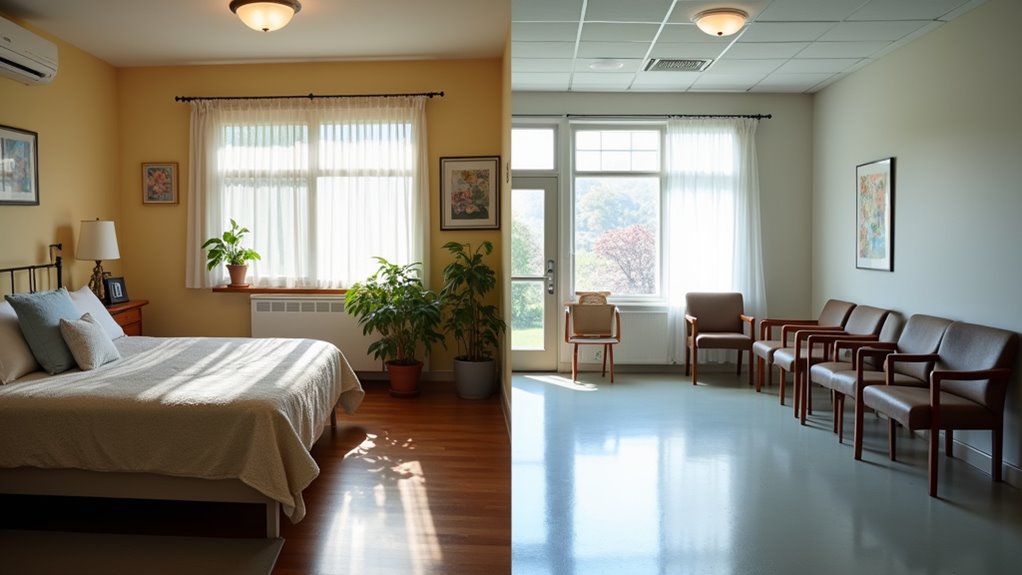
When seeking treatment for substance use or mental health disorders, understanding the different levels of care intensity can help you make an informed decision about your recovery path. Residential treatment offers the most intensive level of care with highly structured programming, including 24/7 supervision and multiple daily therapy sessions. You’ll live on-site and participate in recovery focused activities throughout your stay. According to research, 4.1 million people received substance use treatment in the past year, demonstrating the widespread need for various treatment options. Studies show that patients in residential settings are three times likelier to complete their treatment program successfully. Residential programs incorporate a comprehensive approach to address mind, body, and spirit wellness during recovery.
Outpatient options provide more flexibility, ranging from traditional counseling sessions to intensive outpatient programs (IOP) or partial hospitalization. These allow you to maintain work and family commitments while receiving treatment. IOPs serve as a middle ground, requiring several hours of treatment multiple times per week. Your specific needs and circumstances will determine which intensity level best supports your recovery endeavor.
24/7 Medical Support Vs Flexible Care Options
While residential treatment offers you 24/7 medical supervision with dedicated staff monitoring withdrawal symptoms and providing immediate crisis intervention, outpatient care allows you to maintain your daily responsibilities with flexible scheduling options.
You’ll find extensive medical support and higher completion rates in residential settings where specialized therapies and structured environments minimize relapse risks. These facilities provide a safe environment for individuals to fully focus on their recovery journey. If you need to balance treatment with work or family obligations, outpatient programs offer part-time schedules and lower costs while still providing essential therapeutic support for your recovery process. Many outpatient programs incorporate recovery group participation as a vital component of ongoing treatment success. For those with co-occurring mental health disorders, residential facilities provide dual diagnosis treatment through comprehensive care plans.
Constant Medical Monitoring Available
Three key differences distinguish residential treatment’s medical monitoring from outpatient care. When you choose residential treatment, you’ll receive continuous medical surveillance that guarantees your safety and well-being around the clock. This level of care proves especially indispensable during critical phases like detoxification or mental health crises. Residential treatment provides 24-hour supervision to ensure patient safety, particularly for those who may be at risk. Patients receive structured environment support to maximize their recovery potential.
You’ll have immediate access to medical professionals who can provide expedited medical intervention at any hour, unlike outpatient care’s scheduled-only support. Your withdrawal symptoms and essential signs will be constantly monitored, allowing for quick adjustments to your treatment plan. You’ll receive structured supervision that’s particularly beneficial if you’re dealing with severe substance dependencies or high-risk mental health conditions. The program offers round-the-clock support with an integrated treatment approach that addresses complex medical and psychological needs.
This thorough monitoring can mean the difference between successful recovery and potential complications, especially during the pivotal early stages of treatment.
Adapt Care Around Life
Choosing between medical support and flexible care options boils down to how treatment can fit into your existing lifestyle. If you need to maintain work commitments and family responsibilities, outpatient care offers customized care plans that adapt to your schedule. You’ll have access to weekday and weekend therapy sessions while continuing employment and managing daily routines.
Residential treatment, however, requires you to pause external commitments for full-time care. While this means 24/7 medical support and structured living, it temporarily disrupts your normal life balance adjustments. The program provides a therapeutic community environment where residents support each other through recovery. Medication-assisted treatment helps residents achieve quick progress toward stabilization and symptom relief.
In contrast, outpatient programs let you practice recovery skills in real-world settings, gradually integrating therapeutic techniques into your daily life. You’ll learn to balance treatment with family obligations while maintaining your income and professional responsibilities.
Cost Considerations Between Care Types

When comparing residential and outpatient treatment costs, you’ll find that insurance typically covers a higher percentage of outpatient care, with copays ranging from $20-50 per session versus thousands for inpatient stays. Residential programs are more expensive due to providing 24/7 supervision and comprehensive care. Patients can often shop for prices on outpatient procedures to find more competitive rates at different facilities.
Your out-of-pocket expenses for residential treatment can reach $57,000 or more for a complete program, while outpatient care might cost between $1,400-$10,000 monthly depending on intensity level. State run facilities often provide more affordable treatment options but typically have extended waiting periods.
If cost is a major factor in your decision, you’ll want to verify your insurance coverage details and investigate facilities that offer sliding scale fees or payment plans to make treatment more accessible.
Insurance Coverage Comparisons
Understanding insurance coverage differences between residential and outpatient care is essential for making an informed treatment decision. Your insurance plan typically offers more extensive coverage for residential treatment since it’s considered an inpatient service, while outpatient coverage may require additional riders or have more limitations.
You’ll need to verify pre-authorization requirements carefully, as residential treatment often requires advance approval from your insurance provider, while outpatient services might’ve more flexible authorization processes.
Be aware of plan-specific exclusions that could affect your coverage – some policies limit certain types of outpatient treatments or cap the number of covered sessions. With medical inflation rates increasing annually at 14%, comprehensive coverage becomes increasingly important for both care types.
Your out-of-pocket costs will differ substantially between these options, with residential treatment generally having higher deductibles but broader coverage, while outpatient care often involves lower copays but more restricted benefits.
Out-of-Pocket Payment Differences
The financial reality of treatment costs extends far beyond insurance coverage considerations. You’ll find significant differences between residential and outpatient programs that directly impact your personal financial planning. While residential treatment can cost up to $620 per day in states like Colorado, outpatient care averages just $66 daily, making it a more affordable option for many.
Your lifestyle disruption and financial commitment will vary dramatically between these choices. A 30-day residential program might total $18,600, while comparable outpatient care averages $5,700. If you’re considering intensive outpatient treatment, expect costs between $17,250-$19,500 for a 12-week program. Some facilities offer extended stay discounts and flexible payment options, which can help make treatment more manageable for your budget. Community programs typically provide the most cost-effective solutions compared to private facilities.
Recovery Success Rates Compared
Research consistently demonstrates that residential treatment programs achieve superior completion rates compared to outpatient care, with residential facilities showing a 64.5% success rate versus 51.9% for outpatient programs. You’ll find vastly lower relapse rates in residential settings, particularly when combined with extensive aftercare services.
Residential treatment offers clear advantages, with completion rates 12.6% higher than outpatient care and stronger long-term recovery outcomes.
Key success indicators show:
- You’re nearly three times more likely to complete treatment in a residential program after accounting for other factors
- You’ll experience stronger protection from environmental triggers in a residential setting, especially if you’re dealing with opioid addiction
- You’ll benefit from consistent monitoring and structured support, which directly impacts your recovery success
This data is particularly relevant if you’re struggling with opioid dependency, as residential programs show exceptionally higher completion rates for this specific substance use disorder.
Therapeutic Approaches in Different Settings

Selecting the right therapeutic environment can markedly affect your voyage, with both residential and outpatient settings offering distinct approaches to treatment. In residential focused care settings, you’ll experience all-encompassing 24/7 support with structured daily therapies, including CBT and specialized therapies like mindfulness meditation and yoga. The immersive environment allows for intensive peer group dynamics and constant medical monitoring.
Outpatient care, conversely, provides flexibility while maintaining therapeutic integrity. You’ll engage in targeted sessions that work around your schedule, with intensive outpatient programs offering structured support through real-world challenges. Both settings emphasize relapse prevention, but they differ in delivery – residential treatment provides constant reinforcement, while outpatient care focuses on practical application in your daily life, supported by community resources and family involvement.
Environmental Factors and Recovery
Environmental factors consistently play an essential role in your recovery process, impacting both your advancement and general well-being. When you’re in a high-crime area, you’re 1.5 times more likely to experience anxiety, highlighting why your treatment environment matters greatly for stress management and healing.
Safe, structured environments reduce chaos and promote better mental stability through controlled noise levels, natural light exposure, and regulated temperatures.
Community integration becomes more effective in residential settings where you’re surrounded by positive social networks and consistent support systems.
Structured therapeutic settings help minimize exposure to environmental stressors like pollution, sleep disruptions, and substance abuse triggers.
Your recovery path is deeply influenced by these environmental elements, making the choice between residential and outpatient care vital for your long-term success.
Program Duration and Time Commitments
Building on the impact of your environment, the duration and time commitment of your treatment program greatly influence your recovery process. Research shows that longer residential stays of 60-120 days substantially improve your chances of successful recovery, with treatment progress monitoring indicating 3x higher completion rates compared to outpatient care.
You’ll find that residential programs provide an immersive experience requiring full-time commitment, while outpatient allows you to maintain work and school obligations. However, this flexibility in outpatient settings can complicate treatment shifts and increase relapse risks.
If you’re struggling with opioid dependency or need dual diagnosis care, residential programs offer more extensive support through sustained treatment periods. The statistics are clear: extended residential stays lead to better long-term outcomes, including improved abstinence rates and reduced hospitalization risks.
Support Systems and Social Integration
Support systems can make or break your recovery path, with each treatment option offering distinct approaches to social integration. Residential treatment provides a highly structured environment with 24/7 professional support and extensive aftercare planning, while outpatient care lets you maintain existing relationships while building new support networks.
In residential treatment, you’ll experience intensive peer support through therapeutic communities, supervised family sessions, and personalized stabilization processes within a controlled setting.
Outpatient care allows you to immediately apply recovery skills in real-world situations while keeping your work and family commitments intact.
Both options emphasize building strong support networks, but they differ in approach residential treatment offers immersive community support, while outpatient care focuses on integrating recovery into your existing social framework.
Choose the option that best aligns with your support needs and lifestyle requirements for ideal recovery success.
Long-Term Recovery Maintenance Strategies
While your support network plays an essential role in recovery, maintaining long-term sobriety requires a well-designed strategy customized to your unique challenges. You’ll need to combine both structured techniques and daily practices to build lasting resilience. Focus on developing coping mechanisms through role playing exercises, mindfulness training, and trigger identification workshops.
Whether you choose residential treatment or outpatient care, prioritize family focused activities that strengthen your support system while practicing real-world coping skills.
Track your progress regularly through health assessments and emotional stability metrics. Build practical life skills like budgeting and time management to replace destructive habits. Remember to maintain consistent communication with your therapist and utilize crisis hotlines when needed. This detailed approach will help you navigate challenges while building a sustainable foundation for long-term recovery.
Frequently Asked Questions
How Do Family Visitation Policies Differ Between Residential and Outpatient Programs?
In residential treatment, you’ll find more restricted family visitation policies, especially during early phases, with limited frequency of family visits and structured schedules. You’ll typically need pre-approval and must follow specific time slots.
In contrast, outpatient programs offer you greater flexibility with family involvement in treatment, allowing more frequent contact and home-based interactions. You’ll have more freedom to integrate family visits into your recovery [path] while maintaining therapeutic support.
Can Patients Switch Between Residential and Outpatient Care During Treatment?
Yes, you can switch between residential and outpatient care as your needs evolve during treatment. Your healthcare team will work with you to create personalized treatment plans that adapt to your progress.
You might start with residential care for intensive support, then move to outpatient care with more flexible schedules as you stabilize. Many programs offer structured step-down approaches, including partial hospitalization options, to guarantee you’re getting the right level of care at each stage.
What Personal Items Are Allowed in Residential Treatment Facilities?
You’ll be able to bring essential personal items to make your stay comfortable. Most facilities allow basic clothing, personal hygiene items like toothbrushes, shampoo, and deodorant, and necessary documentation including ID and insurance cards.
Allowed electronics are typically limited to cell phones in designated areas. Remember to avoid bringing prohibited items like straight razors or aerosols. It’s best to check your specific facility’s guidelines, as policies can vary.
Are There Age Restrictions for Different Types of Treatment Programs?
Yes, you’ll find that age limitations differ markedly between programs. Publicly funded services like Medicaid SIPP typically cover individuals under 21, while managing entity programs focus on those under 18.
Private facilities offer more flexibility, with some programs like OPI accepting young adults aged 17-28. Each program provides age-appropriate programming and specialized therapies customized to specific developmental stages.
It’s crucial to verify age requirements directly with facilities you’re considering.
How Do Waiting Lists Compare for Residential Versus Outpatient Programs?
You’ll typically find shorter waiting lists for outpatient programs due to greater program availability and flexible treatment duration. Residential programs often have longer waits because they’ve limited bed space and more complex admission requirements.
While you might wait days or weeks for outpatient care, residential wait times can extend to months, especially in rural areas. If you’re seeking immediate help, outpatient programs may offer quicker access to treatment.