


Residential rehab provides you with 24/7 immersive care in a controlled environment, offering round-the-clock medical support and structured therapy sessions with higher completion rates of 64.5%. In contrast, outpatient programs let you maintain your daily responsibilities while attending flexible treatment sessions over 3-6 months, though with lower completion rates of 51.9%. Your choice between these options will depend on your specific needs, circumstances, and the level of support you require during recovery.
Living Environment and Daily Structure
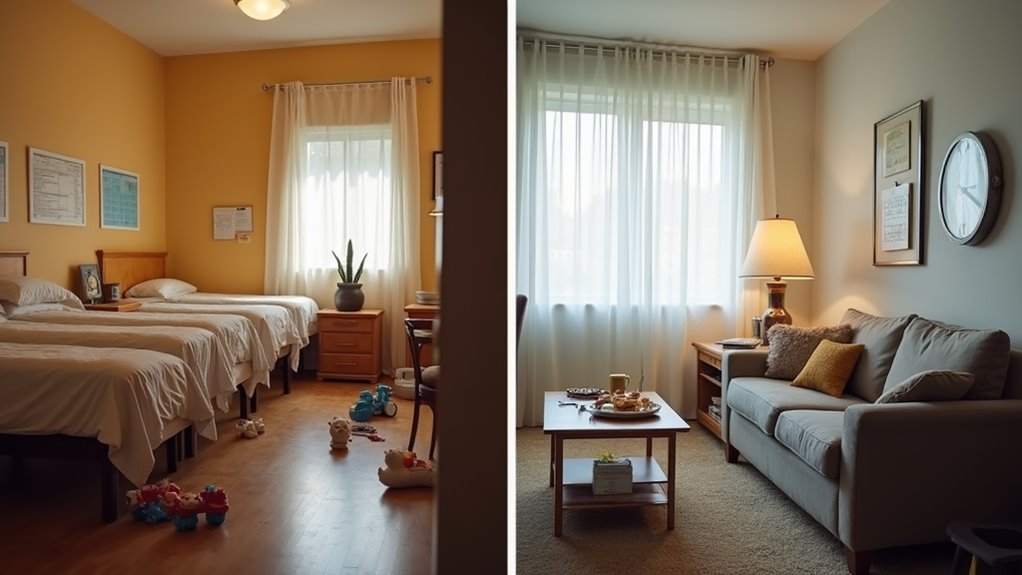
While both residential and outpatient rehab programs aim to support recovery, their living environments and daily structures differ substantially. In residential treatment, you’ll undergo an initial intake assessment and move into a facility where you’ll receive 24/7 care, following strict dietary requirements and predetermined schedules. Medical professionals ensure safe detoxification procedures during the initial phase of residential treatment. These facilities incorporate therapeutic lectures to educate patients about addiction and recovery.
Your daily routine in residential care involves structured therapy sessions, group activities, and meals in a controlled environment with limited personal belongings. You’ll share living spaces with other participants, fostering continuous peer support while remaining secluded from external triggers.
In contrast, outpatient programs allow you to maintain your normal living arrangements, attending scheduled treatment sessions while balancing work and family commitments. You’ll have more flexibility in your daily schedule but won’t benefit from the immersive therapeutic environment that residential care provides. The various outpatient options include PHP and IOP programs that offer different levels of daily treatment intensity.
Treatment Intensity and Medical Support
The intensity and medical support between residential and outpatient programs reflect significant differences in treatment delivery. In residential settings, you’ll receive 24/7 access to extensive care, including medication coordination and crisis intervention teams. Outpatient programs offer more flexibility but with reduced medical oversight. Studies show residential completion rates are significantly higher at 64.5% compared to outpatient programs. Treatment providers conduct thorough needs evaluations to match patients with the most appropriate level of care.
| Aspect | Residential | Outpatient |
|---|---|---|
| Medical Support | 24/7 on-site staff | Limited oversight |
| Treatment Hours | Full-time immersion | Part-time sessions |
| Crisis Response | Immediate intervention | External referrals |
| Medication Management | Direct supervision | Coordinated with outside providers |
For dual diagnosis conditions, residential programs provide integrated treatment addressing both addiction and mental health simultaneously. While outpatient care offers valuable therapeutic support, it typically can’t match the intensive medical monitoring and immediate intervention capabilities of residential facilities. Your specific medical needs and stability will heavily influence which treatment modality is most appropriate. The outpatient approach enables individuals to maintain their daily responsibilities while pursuing treatment.
Length and Phases of Recovery

Your recovery progression’s timeline can differ greatly between residential and outpatient programs, with residential stays typically lasting 30 days to several months, while outpatient care offers more flexible durations.
When you enter residential treatment, you’ll follow predetermined phases starting with detox and moving through intensive therapy, whereas outpatient programs allow you to advance through treatment modules at a pace that accommodates your daily responsibilities. Outpatient programs typically require a commitment of 3 to 6 months for comprehensive recovery support. Outpatient treatment allows you to maintain community integration while pursuing your recovery goals.
You’ll find that residential programs provide structured shifts between phases with clear milestones, while outpatient care enables you to adjust your treatment intensity based on your progress and life circumstances. Residential programs offer the advantage of round-the-clock support to help you maintain focus on your recovery journey.
Recovery Timeline Differences
Choosing between residential and outpatient rehabilitation programs requires understanding their distinct recovery timelines and phases. You’ll find that residential programs offer structured 30-90 day timelines with higher recovery progression rates of 64.5%, including initial detox stabilization timelines that prioritize medical supervision. Participating in a residential program means having access to round-the-clock supervision and continuous medical support throughout your stay.
Outpatient programs extend 3-6 months or longer, allowing you to maintain daily responsibilities while working through progressive phases: partial hospitalization, intensive outpatient, and standard therapy. While outpatient completion rates are lower at 51.9%, they provide flexibility to apply recovery skills in real-world settings.
Your success in either program depends on specific needs residential programs offer accelerated recovery in a controlled environment, while outpatient treatment lets you practice coping strategies while managing regular life stressors.
Treatment Phase Structure
When examining treatment phase structures, residential and outpatient programs follow distinctly different timelines and intensity levels to support recovery. In residential care, you’ll undergo 28-90 days of 24/7 immersive treatment, focusing on stabilization and intensive therapy through group therapy modalities without external distractions. These programs provide therapeutic community support as residents work together toward recovery goals. Medical teams ensure patients receive 24-hour nursing support throughout their stay. The residential setting offers intensive relapse prevention training to help patients develop essential coping skills.
Outpatient programs offer more flexibility, shifting from PHP (5-6 hours daily) to IOP (3 hours per session). These stages, lasting 3-6 months total, gradually integrate family involvement and work commitments into your recovery process. PHP serves as a critical bridge, maintaining structured support while you begin reintegrating into daily life. IOP then emphasizes practical recovery skills and relapse prevention, allowing you to apply therapeutic techniques in real-world situations while maintaining professional and personal responsibilities.
Program Duration Flexibility
The flexibility of program duration stands as a critical differentiator between residential and outpatient treatment options. While residential programs typically follow structured 30-, 60-, or 90-day formats, outpatient care offers more adaptable schedules that can extend from three months to over a year. Residential treatment provides a controlled environment that helps patients avoid relapse triggers and distractions.
Your individual care approach in residential treatment means you’ll live at the facility 24/7, receiving round-the-clock support through a personalized treatment plan. The facility provides 24/7 medical supervision to ensure safe recovery and immediate response to any complications. In contrast, outpatient programs let you balance recovery with daily responsibilities through varied intensity levels. You’ll start with more intensive care (PHP: 5-6 hours daily) and potentially step down to less intensive treatment (IOP: 3 hours daily) as you progress.
Both options adjust their durations based on your stability, recovery milestones, and ongoing needs, ensuring you receive appropriate support throughout your process.
Financial Considerations and Insurance Coverage

Understanding financial aspects and insurance coverage stands as a pivotal step in selecting between residential and outpatient rehabilitation programs. You’ll find significant cost differences, with residential programs requiring more substantial financial commitment due to their extensive services, including accommodation and round-the-clock care.
While most insurance plans cover outpatient treatment more readily, you’ll need to verify your specific coverage terms and potential out-of-network costs. If you’re considering residential treatment, you’ll want to investigate financial planning assistance options, including sliding scale fees, payment plans, or healthcare savings accounts.
Your employment status may also influence your choice, as outpatient programs allow you to maintain your income while receiving treatment. Keep in mind that both programs might’ve additional expenses for medications and aftercare, so it’s important to factor these into your long-term financial planning.
Staff Supervision and Support Systems
Staff supervision levels mark a pivotal distinction between residential and outpatient rehabilitation programs, directly impacting your recovery path. In residential settings, you’ll experience continuous staff engagement through 24/7 on-site responsiveness, with immediate access to medical professionals and specialized care teams. This comprehensive supervision guarantees your safety and provides constant support during critical recovery phases.
Key differences in supervision and support include:
- Residential programs maintain higher staff-to-patient ratios, allowing for personalized attention and immediate crisis intervention
- You’ll have direct access to nurses, counselors, and addiction specialists in residential settings, versus limited scheduled support in outpatient care
- Residential facilities offer structured peer support environments with monitored interactions, while outpatient programs rely on external support networks
This enhanced level of professional oversight can be indispensable for managing complex recovery needs and co-occurring conditions.
Managing Triggers and Relapse Prevention
When you’re in residential rehab, you’ll experience a highly controlled environment that shields you from everyday triggers while building pivotal recovery skills. Your support system in residential treatment includes 24/7 staff supervision and peer interactions, providing immediate assistance during challenging moments.
In contrast, outpatient programs help you develop real-world coping strategies while maintaining your daily responsibilities, though you’ll need to navigate triggers with less direct supervision.
Controlled Vs Real Environment
The fundamental difference between residential and outpatient rehab environments lies in their approach to trigger management and relapse prevention. While residential programs offer 24/7 supervision in a controlled setting, outpatient programs prepare you to face real-world challenges while maintaining your social connections and daily responsibilities.
Residential programs protect you through structured schedules, onsite amenities, and physical separation from triggers. Outpatient treatment strengthens your ability to handle community-based triggers through practical skill-building and aftercare planning. Both environments support recovery, but residential settings show higher short-term success rates, while outpatient programs foster long-term sustainability.
Your choice between these environments should depend on your specific needs, severity of addiction, and ability to manage triggers in your daily life. Each setting offers distinct advantages in developing lasting recovery strategies.
Support Systems In Recovery
Building effective support systems represents a critical difference between residential and outpatient recovery programs. In residential settings, you’ll find built-in peer communities and structured support through 24/7 staff supervision, group therapy sessions, and organized peer mentorship. The controlled environment facilitates focused recovery without external distractions.
Outpatient programs, however, emphasize social network engagement and community reintegration while you maintain your daily routines. You’ll need to actively build support networks through optional peer groups and external communities. While this approach offers more flexibility, it requires greater self-motivation and personal accountability. Family involvement plays a larger role in outpatient treatment, allowing for immediate application of coping strategies in real-world situations. Both programs provide relapse prevention training, but their delivery and implementation differ based on the treatment setting.
Impact on Work and Personal Life
Choosing between residential and outpatient rehab programs substantially impacts your ability to maintain work and personal commitments during treatment. While residential programs require your full-time presence at the facility, outpatient treatment allows you to balance recovery with daily responsibilities.
Time management becomes vital residential care demands 24/7 commitment, while outpatient programs require 9-16 hours weekly. Your family relationships shift dramatically residential treatment limits direct contact, but outpatient care lets you maintain privacy concerns and family dynamics. Financial stability varies greatly residential programs often mean leaving work temporarily, while outpatient treatment allows you to keep your job.
The environment you choose affects not just your recovery but also your ability to maintain personal obligations. Consider how each option aligns with your work schedule, family needs, and financial situation when making this essential decision.
Frequently Asked Questions
Can Patients Switch Between Residential and Outpatient Programs During Their Treatment?
Yes, you can switch between residential and outpatient programs during your treatment experience. Most facilities offer flexibility that allows you to move between levels of care based on your progress and needs.
Treatment continuity is maintained through coordinated care plans, ensuring you’ll receive appropriate support at each stage. You might start with residential care for intensive support, then step down to outpatient services as you build stronger recovery skills.
What Happens if Someone Relapses During Residential or Outpatient Treatment?
If you relapse during treatment, you’ll receive immediate addiction counseling support to address triggers and adjust your recovery plan.
In residential settings, you’re in a controlled environment where staff can quickly modify medication management considerations and therapy approaches.
For outpatient programs, you might need increased session frequency or medication adjustments.
Are Family Therapy Sessions Available in Both Types of Programs?
Yes, you’ll find family therapy sessions available in both residential and outpatient programs, though they’re structured differently.
In residential treatment, family therapy is typically built into your program through scheduled group counseling sessions and structured family visits.
Outpatient programs offer more flexible family support network options, allowing you to arrange sessions around your schedule.
Both approaches recognize that involving loved ones in your recovery process markedly enhances treatment outcomes.
How Do Success Rates Compare Between Residential and Outpatient Treatment Programs?
Success rates vary based on your individual needs and patient engagement levels. While residential programs show higher completion rates for severe cases, outpatient programs achieve around 52% completion.
You’ll find clinical support staff in both settings working to prevent relapse, with residential programs seeing about 50% relapse at three months, while outpatient telemedicine reduces opioid use by approximately 33%. Your best outcome depends on matching the program type to your specific situation and recovery goals.
What Criteria Do Facilities Use to Recommend Residential Versus Outpatient Care?
Treatment facilities conduct individualized assessments to evaluate your specific needs. They’ll consider the severity of your addiction, medical comorbidities, and mental health status.
If you’re experiencing severe withdrawal risks, have complex medical conditions, or need 24/7 supervision, you’ll likely be recommended for residential care. If you can maintain daily responsibilities and have a stable support system, outpatient treatment may be more appropriate for your situation.