


Inpatient rehab offers significant advantages with higher completion rates and 24/7 medical supervision, making it particularly effective for severe addiction cases. You’ll receive structured treatment in a controlled environment, with success rates up to three times higher than outpatient care. However, your choice should depend on factors like addiction severity, financial resources, and insurance coverage. Understanding the unique benefits and challenges of each treatment option will help you make the most informed decision for your recovery expedition.
Understanding Treatment Success Rates

While success rates in addiction treatment can vary markedly across substances and programs, inpatient rehabilitation consistently demonstrates higher completion and recovery rates compared to outpatient care. You’ll find that inpatients are three times more likely to complete treatment, with staff-approved discharges reducing relapse odds by 60%. At 12 months post-treatment, 86% of inpatients report good or better overall health. Evidence-based treatments show consistently better outcomes across all rehabilitation programs.
Success rates differ considerably by substance: alcohol treatment shows 50-60% long-term success, particularly when bolstered by family participation. Opioid treatment achieves 30-50% success with medication assistance, while methamphetamine recovery rates range from 20-30% in sober living environments. With 40-60% of individuals typically experiencing relapse, ongoing support and treatment modifications are crucial for long-term recovery.
The data shows promising outcomes for those who complete inpatient programs, with 89% maintaining sobriety at one month and 69% at six months post-treatment. Florida’s inpatient facilities outstandingly outperform national averages, reporting 70%+ completion rates.
The Financial Investment and Insurance Coverage
Understanding the financial aspects of inpatient rehabilitation becomes a natural next step after evaluating treatment success rates. You’ll face diverse utilization management challenges as Medicare, private insurance, and Medicaid each have distinct coverage policies and requirements. Your out-of-pocket payment strategies will depend on your insurance type and facility choice.
Medicare covers nearly 60% of IRF stays but requires preadmission screening and specific medical criteria. Private insurers often mandate preauthorization and may limit therapy sessions or require network providers. You’ll typically encounter deductibles, copays, and facility fees unless you qualify for full government coverage. With an average stay lasting 18 days, patients need to carefully consider their long-term financial planning.
The declining number of IRF facilities nationwide may affect your access to care and potentially impact costs. Insurance providers increasingly rely on quality metrics when determining coverage, making it essential to research facility performance data through tools like Care Compare.
Comparing Inpatient vs. Outpatient Care
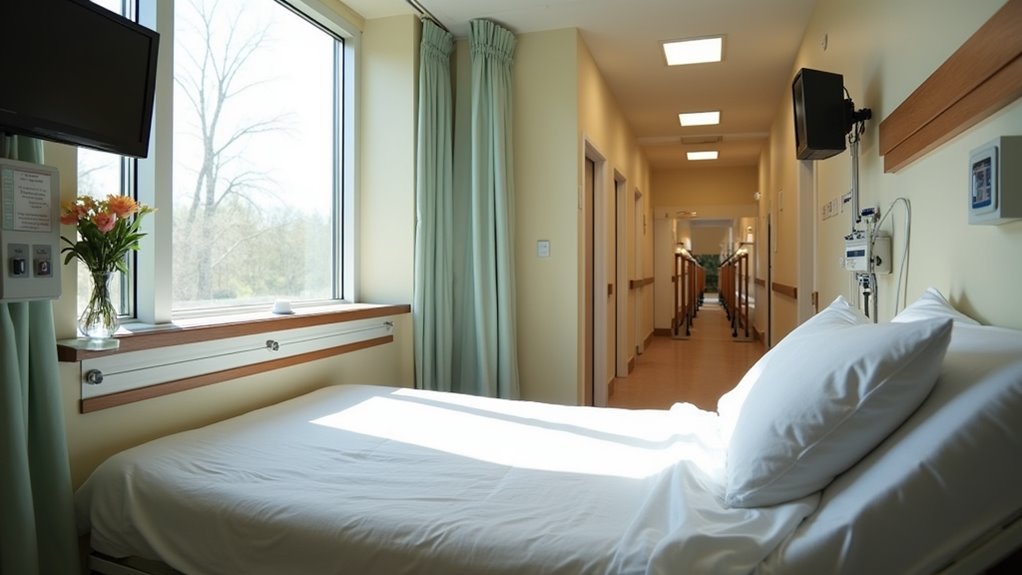
When choosing between inpatient and outpatient rehab, you’ll find distinct differences in treatment intensity, with inpatient offering 24/7 medical supervision and structured routines while outpatient provides flexible scheduling around your daily life. Inpatient programs typically involve a 28-day stay at the treatment facility.
Research shows inpatient programs achieve higher completion rates and immediate abstinence (around 50%), though both modalities demonstrate comparable long-term outcomes for patients with stable home environments. Studies indicate that longer treatment durations significantly improve recovery success rates regardless of the program type chosen.
While inpatient care requires a greater financial investment, it offers key medical detox services and constant professional support that can be pivotal for severe substance use disorders or complex withdrawal cases. For outpatient treatment, a recent study showed that mobile telemedicine programs helped reduce opioid use by nearly one-third within three months after completion.
Treatment Intensity Levels
The intensity levels between inpatient and outpatient rehabilitation programs differ markedly in their structure, supervision, and therapeutic approach. Your level of care considerations should account for the substantial differences in treatment delivery and oversight between these options. Research shows that patients in residential treatment programs demonstrate significantly higher completion rates at 64.5% compared to outpatient care. According to recent data, 4.1 million Americans received some form of substance use treatment in the past year.
Inpatient programs offer a highly structured environment with 24/7 medical monitoring and daily therapeutic activities, while outpatient care provides flexible scheduling with varying degrees of intensity. A comprehensive individual assessment process helps determine which setting will be most effective for your specific situation and needs.
- Inpatient programs deliver constant supervision and immediate crisis intervention through full-time residence
- Partial hospitalization offers near-daily 6-hour sessions as an intensive outpatient option
- Standard outpatient care ranges from weekly sessions to multiple weekly appointments
The structured environment benefits of inpatient care include extensive medical monitoring, managed schedules, and elimination of external triggers. Your recovery needs and severity of addiction will determine which intensity level best suits your situation.
Success Rate Differences
Success rates between inpatient and outpatient rehabilitation programs reveal nuanced differences that depend heavily on individual patient factors and addiction severity. Both treatment modalities show abstinence rates of 50-70%, with patient-reported outcomes suggesting comparable effectiveness for mild to moderate cases.
Similar to other chronic medical conditions, addiction treatment requires ongoing evaluation and adjustment when relapses occur, with rates between 40-60%. Inpatient programs often yield better results for severe addiction, though they still face a 50% relapse rate within three months post-discharge. Community-based initiatives through outpatient care achieve 52% completion rates, demonstrating similar challenges in maintaining engagement. Medical professionals are available around the clock to provide constant care and supervision during inpatient treatment. Your success depends more on matching treatment intensity to your specific needs than the program type itself.
If you’re dealing with dual diagnosis or require medical detoxification, inpatient care may offer advantages, while those with strong support systems often thrive in outpatient settings.
Cost-Benefit Analysis
Comparing inpatient and outpatient rehabilitation costs reveals extensive financial differences that’ll impact your treatment decision. When evaluating treatment affordability, you’ll find inpatient programs range from $5,000 to $80,000, while outpatient care typically costs between $1,400 and $10,000 for a 30-day program. Your quality of life impacts and recovery needs must be weighed against these costs. The average state cost for outpatient drug rehab is approximately $1,764, making it a more accessible option for many patients.
Inpatient care offers all-encompassing 24/7 supervision and amenities but comes with higher costs, potentially offset by insurance coverage. Room and board significantly increases facility overhead, driving up overall program costs. Many facilities offer sliding scale fees to help make treatment more financially manageable. Outpatient programs provide flexibility and lower base costs but may incur additional expenses for transportation and monitoring. Partial hospitalization presents a middle-ground option at $350-450 daily, combining structured treatment with home independence.
Consider your insurance coverage, as thorough plans may considerably reduce out-of-pocket expenses for either option, particularly for inpatient care.
Geographic Differences in Recovery Outcomes

Success rates for inpatient rehabilitation show striking geographic variations, with facilities achieving community discharge rates ranging from 42.9% to 83.6% across the United States.
You’ll find Western states like Oregon and Hawaii consistently outperforming Northeastern states like Massachusetts and New Hampshire in rehabilitation outcomes. Regional differences persist despite risk adjustments for patient factors, suggesting that local healthcare delivery systems and standardized protocols play a significant role in recovery success.
Regional Success Rate Variations
The analysis of inpatient rehabilitation outcomes reveals notable disparities between urban and rural regions across the United States. You’ll find higher success rates in urban areas due to greater facility availability and access to specialized care programs. Rural infrastructure barriers often limit your treatment options and affect long-term recovery outcomes.
Key regional variations that may impact your recovery success:
- Urban centers provide more extensive aftercare support, particularly for alcohol and marijuana addiction treatment
- Rural areas typically offer shorter-term interventions with lower continuation rates following initial detox
- Geographic differences in healthcare infrastructure directly influence your access to medication-assisted treatment and specialized programs
When choosing an inpatient facility, you’ll need to reflect on how your location affects treatment options, as regional disparities can considerably impact your recovery journey’s success rate.
Top-Performing State Programs
While geographic location remarkably influences recovery outcomes, certain state programs consistently demonstrate superior performance metrics across multiple quality indicators. You’ll find higher success rates in states where facilities maintain rigorous staff training standards and proper accreditation status through organizations like JCAHO or CARF.
Top-performing states show measurable advantages: their facilities achieve 6.2% lower hospitalization rates during stays and 68.9% successful community discharge rates compared to lower-performing regions. These programs typically feature extensive dual diagnosis treatment, evidence-based protocols, and strong post-discharge support systems.
Furthermore, states with mandatory outcome reporting and regular quality audits tend to maintain higher standards of care. When evaluating your options, consider facilities in regions that prioritize these quality benchmarks and maintain strong healthcare integration networks.
Key Factors That Influence Treatment Choice
Selecting appropriate addiction treatment requires careful evaluation of multiple interconnected factors that determine therapeutic effectiveness. Your severity of addiction, home environment factors, and transportation considerations will greatly impact whether inpatient or outpatient care best suits your needs.
Choosing effective addiction treatment involves assessing key factors like addiction severity, living situation, and access to care facilities.
If you’re struggling with severe addiction or co-occurring mental health disorders, inpatient treatment provides the structured environment and extensive medical oversight essential for successful recovery.
Your financial resources and insurance coverage play a vital role, as inpatient programs cost substantially more than outpatient options but may offer more intensive support during early recovery.
Consider your current lifestyle demands and support system outpatient programs allow you to maintain work and family responsibilities while receiving treatment, whereas inpatient care removes you from potential triggers and distractions in your daily environment.
Medical Support and Supervision Benefits
Thorough medical supervision forms the cornerstone of inpatient rehabilitation programs, offering distinct advantages over outpatient care. You’ll receive daily physician visits, specialized rehabilitation expertise, and 24/7 nursing care through multidisciplinary collaboration. This intensive monitoring ensures rapid response to medical complications and optimal recovery progression.
| Medical Support | Supervision Level | Key Benefits |
|---|---|---|
| Physician Care | Daily Visits | Immediate Intervention |
| Nursing Staff | 24/7 Coverage | Continuous Monitoring |
| Specialist Team | Weekly Conferences | Coordinated Care |
The comprehensive medical oversight extends beyond basic care to include post discharge planning, medication management, and specialized treatments. You’ll have immediate access to on-site diagnostic services, pharmacy support, and emergency interventions. This level of medical supervision helps prevent hospital readmissions and supports a safer passage to independent living.
Evaluating Your Personal Recovery Needs
Identifying your personal recovery needs requires careful evaluation of multiple factors that influence treatment success. The severity of your substance use, presence of co-occurring mental health conditions, and your individual readiness for change all play imperative roles in determining if inpatient care is your ideal path.
Your psychosocial support systems and exposure to environmental triggers will also impact treatment outcomes.
Severe substance dependencies, especially with multiple substances or previous relapse history, often benefit from the intensive structure of inpatient programs.
Co-occurring mental health conditions like anxiety or depression require integrated treatment approaches available in extensive inpatient settings.
Your home environment’s stability, including access to substances and presence of supportive relationships, greatly affects whether you’ll need the protected space of residential care.
Long-Term Recovery and Discharge Success
Successfully completing an inpatient rehab program marks just the beginning of your recovery path. Statistics show that while 68% of patients complete their treatment, maintaining long-term sobriety requires ongoing dedication and support. Your chances of sustained recovery increase significantly with familial involvement and structured aftercare planning.
You’ll face a critical period during your first year post-discharge, where relapse risks range between 40-60%. To amplify your success, consider combining medication assisted treatment with 12-Step programs and community support networks. These interventions help bridge the shift from inpatient care to independent living. Research indicates that longer treatment durations, particularly 113 days for opioid treatment, coupled with consistent counseling and family therapy, substantially improve your odds of maintaining sobriety beyond the nine-month mark.
Frequently Asked Questions
Can I Have Visitors During Inpatient Rehab Treatment?
Yes, you can have visitors during inpatient rehab, but facilities maintain strict policies. Most centers require therapist approval and enforce designated visiting hours. You’ll typically experience an initial blackout period, and visits are limited to 2-3 people at a time.
Family involvement is often encouraged through structured sessions, though all visits must occur in specified areas. Children under 12 may have restricted access, and all visitors must follow facility guidelines.
What Personal Items Am I Allowed to Bring to Rehab?
You’ll need to bring essential personal documents like your ID, insurance cards, and medical records. Most facilities allow basic comfort items including comfortable clothing, toiletries (alcohol-free), and prescription medications in original containers.
You can typically bring photos, books, and unopened hygiene products. However, specific policies vary by facility, so it’s crucial to contact your treatment center for their complete list of permitted and restricted items.
How Long Is the Typical Waiting List for Inpatient Rehabilitation?
Wait times for inpatient rehabilitation vary considerably based on your specific condition and referral source. You’ll typically find waiting periods ranging from 0-7 days for urgent cases to several weeks for non-urgent situations.
Bed availability concerns can extend these timeframes, particularly in high-demand facilities. While the average length of stay impacts waiting lists, current occupancy rates around 69% suggest moderate accessibility.
Your healthcare provider can give you facility-specific estimates.
Are Phones and Electronic Devices Permitted During Inpatient Stays?
Facility policies on electronic device usage vary markedly during inpatient stays. You’ll typically face initial restrictions, often starting with a 4-day device hold period.
After this, you’ll likely have supervised access with time limits (around 1.5 hours daily) and staff oversight. Your access privileges may increase based on your treatment progress and compliance with program rules.
Some facilities maintain more stringent policies, while others offer greater flexibility, especially for work-related device use.
Can I Leave the Facility During Weekends or Special Occasions?
You’ll need pre-authorization for any temporary leaves from the facility. While supervised outings and scheduled breaks may be permitted for special occasions or emergencies, these must be coordinated with staff in advance.
Your treatment team will evaluate your progress and readiness before approving any absences. Keep in mind that unauthorized exits can jeopardize your treatment, and you may incur bed-holding charges during approved leaves. Insurance coverage for absences varies by policy.