


You’ll find significant cost differences between residential and outpatient addiction treatment in 2025. A 30-day residential program ranges from $6,000 to $30,000, with an average of $18,000, while outpatient care costs substantially less at $1,400 to $10,000 over three months. Location, facility certifications, and service scope impact pricing, with urban centers charging premium rates. Insurance coverage and payment plans can help offset these expenses, and exploring all options reveals potential savings opportunities.
Understanding the Price Gap: Residential vs. Outpatient Care
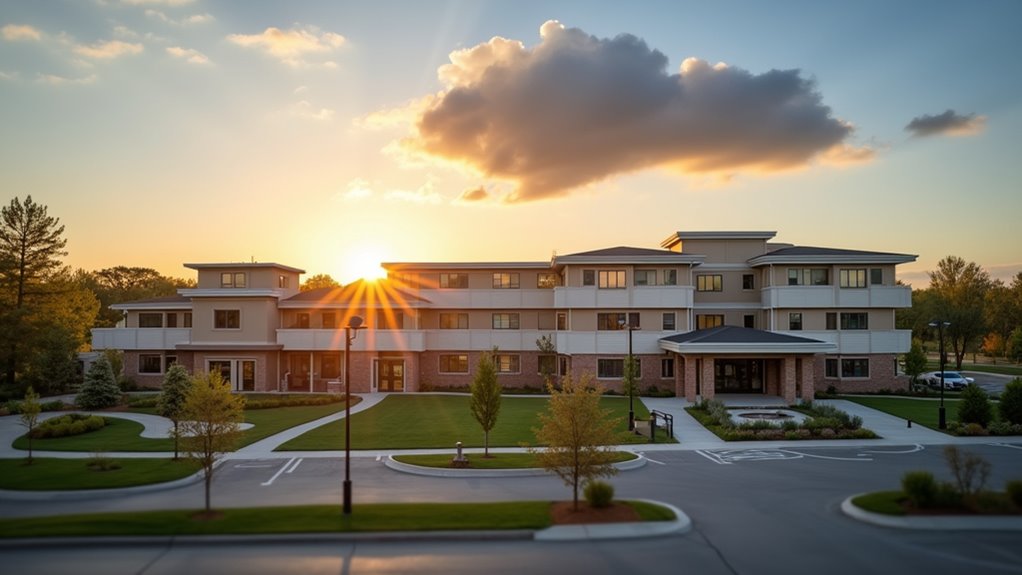
While seeking addiction treatment, you’ll encounter a substantial price difference between residential and outpatient care options. Standard 30-day residential programs cost $6,000-$30,000, while outpatient programs range from $1,400-$10,000 over three months, representing a 60-80% cost reduction. Most participants maintain similar treatment outcomes between residential and outpatient care. A typical sober living cost averages $1,750 monthly for those transitioning to independent living. The state of Idaho offers the most affordable residential rehabilitation programs nationwide.
Patient enrollment factors significantly impact pricing, with residential daily rates averaging $500-$650 compared to outpatient intensive programs at similar rates but with fewer weekly hours. Care coordination challenges affect costs differently: residential programs include 24/7 medical monitoring and extensive services, while outpatient care focuses on specific therapy sessions. You’ll need to consider additional residential expenses like $3,000-$4,000 admission fees and housing costs. Luxury residential facilities can reach $80,000, whereas intensive outpatient programs typically max out at $10,000.
Key Factors Driving Rehab Treatment Costs
Several key variables shape addiction treatment expenses, building upon the residential and outpatient cost differences. Geographic location impact enormously affects pricing, with urban facilities charging premium rates and state-specific funding varying by region. You’ll find service scope influence reflected in daily costs: medical detox ($250-$900), partial hospitalization ($350-$450), and specialized therapies driving prices higher. Mental health care is typically included in comprehensive treatment programs, adding value to the overall service package. Facilities investing in quality certifications often command higher rates due to their demonstrated commitment to superior care standards. Most major insurers like Blue Cross Blue Shield provide varying levels of coverage for addiction treatment.
Program duration directly correlates with total expenses; a 30-day inpatient stay ranges from $6,000-$30,000, while extended 90-day programs can exceed $60,000. Your treatment intensity choice drastically affects costs, from basic outpatient services ($2,000-$19,500 monthly) to luxury facilities (over $80,000). Insurance coverage varies widely, with private policies offering different levels of support and state-funded programs providing subsidized options for qualifying individuals.
Breaking Down Residential Rehab Expenses

Residential rehab expenses follow predictable patterns based on program duration, with 30-day programs ranging from $5,000 to $20,000 and extended 60-90 day stays costing between $12,000 and $60,000. Staff expertise influences pricing considerably, while amenity considerations can push costs above $80,000 for luxury facilities. Research shows that longer treatment programs are linked to better recovery outcomes. Most facilities accept health insurance coverage to help offset the substantial costs of treatment.
| Program Type | Daily Cost Range |
|---|---|
| Basic Private | $575 average |
| Medical Detox | $250-$900 |
| Luxury Care | $800-$1,500 |
| Public Facility | $275-$400 |
You’ll find daily rates vary based on location and service level. Private facilities with intensive therapy programs command higher rates, while state-funded options provide more affordable alternatives. Treatment components like 24/7 supervision, specialized therapies, and medical staff availability contribute to your total investment.
Outpatient Treatment Cost Analysis
Outpatient addiction treatment typically costs between $1,400 and $10,000 for 30-day programs, with standard programs averaging $5,700 monthly. Your outpatient provider selection will greatly/substantially/considerably impact costs, with urban facilities charging premium rates compared to rural locations. Due to security measures, some addiction treatment websites may be temporarily inaccessible while protecting against online threats. When evaluating outpatient quality metrics, consider that intensive programs cost noticeably/markedly/significantly more than standard care. Studies show that 72% of patients must travel over 50 miles to access specialized treatment programs in rural areas. With over 2,000 centers operating across California, patients have extensive options for outpatient care.
Key program costs you’ll encounter:
- Intensive Outpatient (IOP): $575 daily, averaging $17,250 for 30 days
- Partial Hospitalization (PHP): $400 daily, totaling $10,500-$13,500 monthly
- Medication-Assisted Treatment: $7,000 per outpatient program
- Standard 3-month programs: $5,000 total
You’ll find California’s outpatient programs averaging $8,000 per person, while extended treatment plans may qualify for cost reductions through provider discounts.
Insurance Coverage and Payment Options

While comprehending program expenses is vital, maneuvering insurance coverage can substantially diminish your personal expenditures for addiction treatment. Under the ACA, you’ll find essential coverage for addiction services without pre-existing condition exclusions. Medicare now covers medical detox, prescriptions, and counseling, while Medicaid expansion offers additional non-clinical support like housing and transportation in participating states. Recent federal laws now require insurers to provide equal behavioral coverage compared to medical services. Many treatment centers offer payment plans to help manage costs. The ACA’s tiered plans offer coverage ranging from Bronze to Platinum, with expense coverage from 60% to 90%.
You’ll need to evaluate out of network considerations carefully, as network restrictions can limit specialty program access. Private insurance typically requires prior authorization for inpatient care, though employer plans often feature lower cost-sharing. For affordability, you can investigate need-based tax credits through the Health Insurance Marketplace or access sliding-scale clinics. Treatment completion could save $25,000-$105,000 in relapse-related costs per person.
Duration Impact on Total Treatment Costs
Several key factors determine your total treatment costs, with program duration being one of the most significant. When evaluating treatment options, you’ll need to take into account how length impacts your financial commitment and relapse prevention strategies.
- Standard residential programs run 13 weeks at $14,000-$27,000 per month, potentially totaling $42,000-$81,000 for extensive alcohol addiction treatment
- Intensive outpatient care spans 12 weeks at $575 daily, accumulating to $48,300 for all-encompassing alcohol addiction treatment
- Non-methadone outpatient programs extend to 18 weeks, offering cost savings of 60-80% compared to inpatient care
- Patient compliance challenges often lead to program extensions, with therapeutic communities lasting up to 33 weeks at additional expense
Extended care may qualify for discounted rates, though admission fees of $3,000-$4,000 still apply to residential programs. Programs in luxury beachside locations typically command premium prices due to their prime settings and enhanced amenities. In addition, consider state-funded options for long-term affordability.
Cost-Saving Strategies for Addiction Recovery
Many cost-effective strategies can dramatically reduce addiction treatment expenses while maintaining quality care. Choosing outpatient rehab can save you 60-80% compared to residential programs, with costs ranging from $1,400-$10,000 for three months versus $6,000-$20,000 for 30 days inpatient. To ascertain financial sustainability while supporting family obligations, you’ll find sliding-fee scales, Medicaid coverage, and state-funded facilities that offer quality treatment at reduced rates.
Maximize available resources by combining government assistance, nonprofit grants, and faith-based programs. You can build emergency funds of $500-$1,000 through automated savings and implement strict budgeting practices. The investment is worthwhile; every $1 spent on treatment yields $4 in healthcare savings and $7 in reduced criminal justice costs.
Making an Informed Financial Decision for Recovery
Making sound financial choices for addiction treatment requires understanding the substantial cost differences between care options. When evaluating programs, you’ll need to weigh facility accreditation and cultural competency alongside costs to guarantee quality care that fits your budget.
- Standard inpatient programs cost $5,000-$30,000 monthly, while luxury facilities range from $20,000-$80,000
- Outpatient treatment offers significant savings at $1,400-$10,000 monthly, with intensive programs averaging $17,250
- Insurance coverage can reduce out-of-pocket expenses from $500 per session to potentially no cost
- Medication-assisted treatment averages $5,980 annually, providing a cost-effective long-term solution
Consider location impacts, as urban and beachside facilities charge premium rates. Rural centers often provide comparable care at lower costs, though you’ll need to factor in potential travel expenses.
Frequently Asked Questions
How Do International Rehab Costs Compare to U.S. Treatment Programs?
You’ll find international rehab facilities generally cost 40-60% less than U.S. programs, though patient travel costs can offset these savings. For example, Thailand’s luxury facilities average $14,000/month compared to $42,500 in the U.S. European centers typically range from $20,000-$30,000 monthly. Mexico and Costa Rica offer programs starting at $12,000/month. However, when you factor in flights and accommodation, total expenses can approach U.S. rates for overseas treatment.
What Percentage of Patients Successfully Complete Their Chosen Rehab Program?
You’ll find that program completion rates differ markedly across treatment types. Residential rehab programs achieve the highest success at 65%, while standard outpatient programs range from 35-50%. SAMHSA data shows a collective 42% completion rate across all programs, with 22% of patients transferring to further treatment. Patient satisfaction metrics indicate that residential programs, with their structured environments, constantly outshine outpatient options. Court-ordered participants tend to show higher completion rates due to legal requirements.
Can Family Therapy Sessions Be Added to Existing Treatment Plans?
Yes, you can incorporate family therapy sessions into your existing treatment plan, whether you’re in individual therapy or group counseling. Treatment centers report that 85% of programs successfully integrate family sessions after initial patient stabilization. You’ll find that therapists coordinate these inclusions around your core rehab activities, typically scheduling 1-2 family sessions per week in outpatient settings or bi-weekly in residential programs, without disrupting your primary treatment schedule.
Are There Special Payment Plans for Veterans Seeking Addiction Treatment?
You’ll find extensive payment assistance options as a veteran seeking addiction treatment. The VA offers thorough coverage for eligible veterans, while sliding scale fees can reduce your costs based on income. You can access financial assistance availability through multiple channels: VA Health Care Benefits, payment plans, private insurance, and government grants. In addition, you’ll find specialized programs like the VA Choice Program and VR&E that provide dedicated funding for treatment services.
How Often Do Rehab Facilities Offer Scholarships for Treatment Programs?
You’ll find scholarship availability varies widely among rehab facilities, with most centers offering some form of financial assistance programs. Typically, facilities distribute scholarships on a semester-based cycle (spring/fall), ranging from $1,500 to $3,000+ per award. You can expect about 60% of facilities participating in SAMHSA Block Grant programs to provide scholarship options, while private foundation collaborations offer supplementary funding opportunities through nonprofits, usually covering between $5,000-$10,000 of treatment costs.