


Modern opioid treatment programs combine FDA-approved medications like buprenorphine, methadone, and naltrexone with flexible telehealth options for your recovery path. You’ll work with an interdisciplinary team through video visits and in-person care, receiving individualized treatment plans that address your physical health, mental wellness, and social needs. Programs now offer streamlined medication access, crisis response services, and coordinated community support – innovations that have contributed to a 27% reduction in overdose deaths. Understanding these detailed treatment approaches can help you make informed decisions about your care.
Updated Treatment Standards and Regulations

Significant regulatory changes in opioid treatment programs (OTPs) reflect evolving standards for 2025, particularly in telehealth flexibility and service delivery. You’ll find that enrollment policies have adapted to include audio-only assessments when video isn’t available, while specialty clinic oversight guarantees platforms support thorough patient evaluations. Programs must maintain a robust interdisciplinary team that includes licensed counselors and addiction specialists.
Medicare’s coverage now encompasses periodic telehealth check-ins and expanded intensive outpatient services, requiring documented treatment plans and certified clinician supervision. Programs must maintain SAMHSA certification to operate legally and provide medication-assisted treatment services. You must include OUD diagnosis codes for service coverage, and you’re required to conduct SDOH risk assessments during intake and reassessments. While federal guidelines aim to streamline access, state-specific regulations often create additional barriers. Nearly 80% of U.S. counties lack access to OTPs, highlighting significant gaps in treatment availability. Virginia OTPs, for instance, must comply with DBHDS licensing requirements, highlighting the complex interplay between federal and state oversight.
Medication Options and Dispensing Methods
Modern medication-assisted treatment for opioid use disorder centers on three FDA-approved options: buprenorphine, methadone, and naltrexone. Each medication follows streamlined dosing protocols designed for improved patient comfort and treatment adherence. This combined approach has proven to be the gold standard treatment for opioid dependence. With over 150 deaths daily from opioid overdose in 2023, these treatment options remain critical for addressing the ongoing crisis.
| Medication | Dispensing Location | Administration Method |
|---|---|---|
| Buprenorphine | Physician offices | Sublingual or monthly injection |
| Methadone | Specialized clinics | Daily oral dosing |
| Naltrexone | Outpatient settings | Monthly intramuscular injection |
You’ll find buprenorphine most accessible through physician offices, with Sublocade offering a simplified injection option in diverse body sites. Methadone requires daily visits to specialized clinics, while naltrexone demands complete opioid detoxification before starting treatment. Extended-release formulations have revolutionized treatment by reducing dosing frequency and enhancing adherence rates, particularly with newer options like Sublocade that require only initial sublingual doses before shifting to monthly injections. The injectable medication forms a gel under the skin that provides steady, consistent medication release throughout the month.
Telehealth Services and Remote Access

While medication options remain central to treatment, telehealth has transformed how patients access opioid care services. You’ll find expanded remote options through 2025, including video-based methadone initiation and audio-only assessments for ongoing care. Telehealth outcomes show promising results, with 65% of remote patients attending initial follow-ups compared to 32% of in-person starts. A recent study found that 28% of patients using telehealth had not seen their prescribing doctor in the prior two years. Patients treated through telehealth services demonstrated 33% lower odds of experiencing fatal overdose.
Your insurance type considerably influences telehealth adoption factors, with Medicare and private insurance patients more likely to start treatment remotely. You can now receive buprenorphine prescriptions via telehealth for six-month periods, though you’ll need to verify your provider follows current DEA guidelines. Behavioral health specialists and nurse practitioners frequently offer these services, particularly benefiting patients in underserved areas who face transportation barriers. Studies demonstrate that patients receiving telehealth services are more likely to achieve 53% retention rates after 30 days of treatment compared to traditional emergency department referrals.
Patient Assessment and Care Planning
A thorough patient assessment forms the foundation of effective opioid treatment programming. Using a trauma-informed approach, clinicians evaluate your physical health, substance use history, and co-occurring conditions through detailed medical exams and laboratory testing.
Your individualized care plan integrates:
- Social determinants based interventions targeting housing, employment, and food security needs
- Evidence-based recovery support services, including counseling and peer mentorship
- Medication management protocols with careful methadone dosing and take-home considerations
You’ll receive ongoing monitoring of your treatment progress through standardized assessments and regular check-ins. Professional interpreters guarantee clear communication if English isn’t your primary language. Your care team coordinates with community partners to address barriers to recovery, while encouraging family involvement when appropriate. This integrated approach optimizes your chances for sustained recovery success.
Emergency Response and Crisis Management
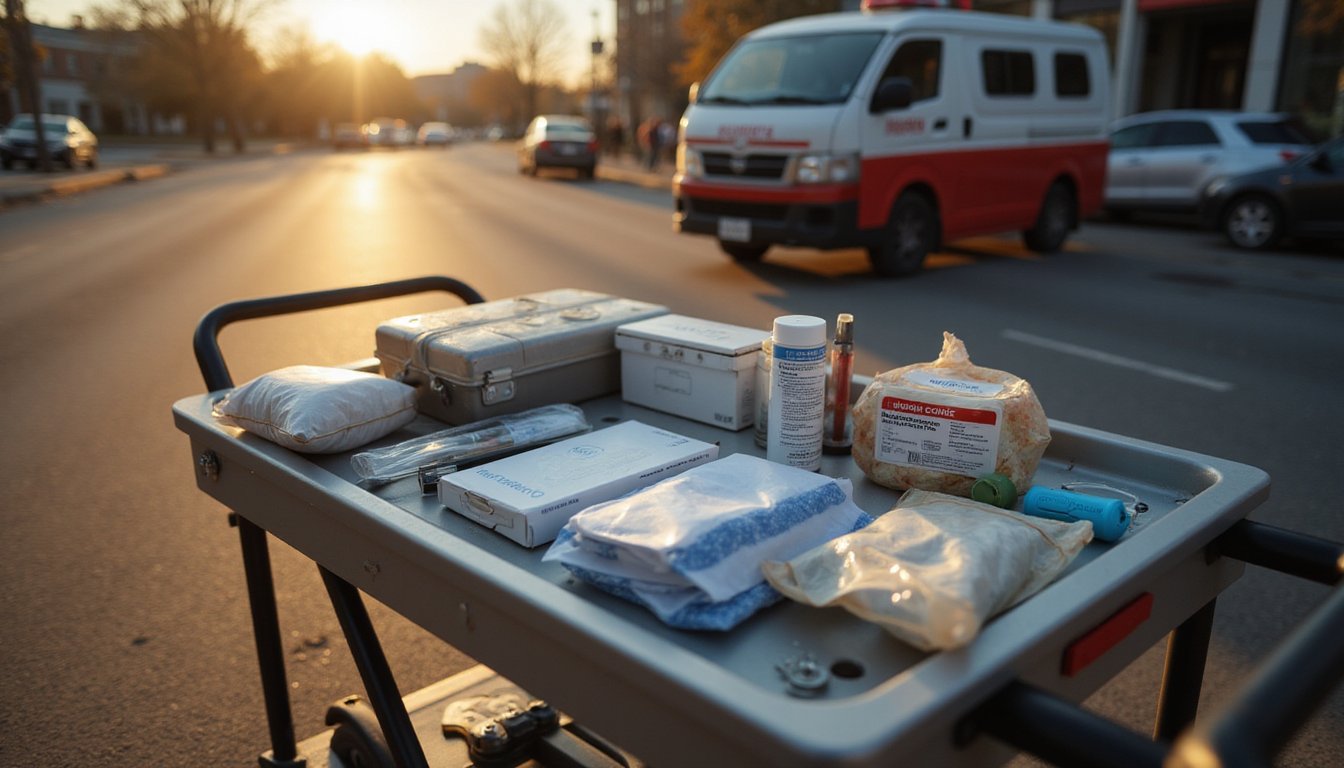
Rapid response mobile units now form the backbone of your community’s emergency opioid intervention system, providing immediate medication-assisted treatment and naloxone distribution within critical response windows. You’ll find expanded hospital-based treatment programs operating 24/7, with direct pathways to initiate buprenorphine treatment and connect to ongoing care services. Healthcare providers must now carefully document treatment plans and medical necessity for every opioid prescription issued during emergency interventions. Your local crisis response network integrates real-time data from PDMPs and emergency services to coordinate immediate interventions, while maintaining continuity of care through electronic health record systems. The comprehensive strategy has contributed to a remarkable 27% annual drop in overdose deaths nationwide, marking unprecedented progress in combating the opioid crisis. Expert anesthesiologists continue to lead implementation of best practices for reducing opioid utilization across all treatment programs.
Rapid Response Mobile Units
Modern crisis response systems increasingly rely on mobile treatment units as frontline interventions for opioid emergencies and behavioral health crises. These units operate specialized teams trained in managing high volume crisis situations, combining clinical expertise with rapid deployment capabilities.
Key operational elements include:
- Mobile clinics providing on-site methadone, suboxone, and health screenings
- Interdisciplinary teams staffed with clinicians, law enforcement, and addiction specialists
- Real-time coordination with 988 Lifeline for immediate dispatch to crisis locations
These units effectively reduce emergency room visits while increasing access for vulnerable populations. The model requires specialized training in mental health de-escalation, addiction management, and naloxone administration. Many cities like Vancouver are investing $1.65 million in mobile treatment programs to expand their reach. By combining medical evaluations with crisis intervention, mobile units serve as critical bridges to long-term treatment options, particularly in underserved communities.
Hospital-Based Treatment Access
Through extensive hospital-based addiction consultation services, healthcare systems are transforming emergency departments and inpatient units into critical access points for opioid use disorder treatment. You’ll find that programs like START have doubled MOUD initiation rates compared to standard care, while addressing systemic barriers through patient centered programming. Research shows that addiction consultation services achieve 68% treatment engagement within 30 days post-discharge. These programs are particularly effective with low-income populations, who often face the greatest barriers to treatment access.
When you’re hospitalized, you’ll receive universal OUD screening and immediate access to medication options. The controlled hospital environment helps overcome traditional treatment obstacles like transportation and stigma. You’ll benefit from holistic recovery supports, including SDOH assessments and post-discharge care coordination with OTPs. The 2025 CMS payment updates now support comprehensive services, including telehealth options and bundled treatment packages that guarantee you receive evidence-based care during and after your hospital stay.
24/7 Crisis Care Integration
Building on expanded hospital access, extensive crisis care integration now forms the backbone of OTP emergency response systems. Your access to crisis care involves trauma informed programs and culturally competent crisis interventions through a coordinated network of providers and peer specialists.
Modern crisis response systems incorporate:
- Immediate telehealth assessments via audio/video platforms, enabling rapid intervention without requiring in-person visits
- Community-based overdose response with nalmefene nasal spray distribution and peer recovery navigation
- Thorough SDOH screening to address housing, food security, and economic barriers that often trigger crises
You’ll find seamless exchanges between emergency care and ongoing treatment, supported by the 988 Suicide & Crisis Lifeline integration. This system particularly benefits vulnerable populations through targeted protocols for pregnant individuals, rural communities, and culturally diverse groups.
Insurance Coverage and Payment Structures
As Medicare expands coverage for opioid treatment programs (OTPs), substantial changes in payment structures and insurance policies are reshaping access to medication for opioid use disorder (MOUD).
You’ll find that bundled payments under Medicare Part B now cover FDA-approved medications, comprehensive behavioral services, and mobile van utilization. While Medicare waives cost-sharing after deductibles, out-of-pocket cost barriers persist, with patients facing average annual expenses of $728. Value-based reimbursement models are emerging to align payment with outcomes.
Coverage varies extensively across insurers. While Medicaid guarantees access to at least one MOUD formulation, private insurers often impose restrictions. Medicare now covers ASAM Levels 1, 2, and 4, though Level 3 residential care remains excluded. Payment parity gaps continue to challenge equitable access across treatment modalities.
Building Healthcare Provider Networks
You’ll find that expanding cross-clinic care networks requires strategic partnerships with mobile treatment teams and mental health providers to create all-encompassing coverage for OTP patients. Your facility’s integration of mobile treatment units can effectively bridge geographic gaps while maintaining consistent care standards across multiple locations. By coordinating with mental health services, you’re able to address co-occurring disorders through shared treatment plans, which the data shows improves patient retention by leveraging telehealth platforms and standardized referral protocols.
Expanding Cross-Clinic Care Networks
The expansion of cross-clinic care networks through 2025 relies heavily on telehealth innovations and extensive MOUD service integration. Through centralized intake coordination, you’ll find government-operated facilities leading comprehensive treatment delivery, while workforce training programs guarantee standardized care across locations.
Key developments in cross-clinic networks include:
- Telemedicine platforms enabling remote consultations with 53% patient retention rates, compared to 22% for in-person care
- Multi-MOUD hubs offering expanded access to all three medications, with higher Medicare (65.8%) and Medicaid (86.7%) acceptance rates
- Integrated billing systems supporting coordinated care delivery through new add-on codes and SDOH assessments
These interconnected systems allow you to utilize both audio and video consultations while maintaining consistent treatment protocols across participating facilities, ultimately improving long-term patient outcomes.
Mobile Treatment Team Integration
Successfully integrating mobile treatment teams into healthcare provider networks requires strategic deployment of Mobile Medication Units (MMUs) and telehealth infrastructure. You’ll find that MMUs now operate as extensions of Opioid Treatment Programs, providing same-day assessments and medication access across 17 states.
Your workforce recruitment efforts should focus on building partnerships with academic medical centers and community organizations. You can utilize telehealth platforms to connect patients with specialists, while your mobile teams deliver point-of-care services. Community partnerships are essential for sustainability, particularly in rural areas where you’ll need to address logistics and connectivity challenges. Through hybrid delivery models, you can optimize your care network’s reach by combining in-person services with remote assessments, ensuring broader access to treatment while maintaining clinical standards.
Coordinated Mental Health Services
Building extensive mental health networks within OTPs requires strategic integration of behavioral health services alongside medication-based treatment. You’ll find that modern programs utilize both clinical and community-based resources through peer-based interventions and strategic community partnerships.
Key components of coordinated mental health services include:
- Implementation of bundled payment structures covering group therapy, individual counseling, and peer recovery support services
- Integration of FDA-cleared digital mental health tools and telehealth platforms that boost access to behavioral health interventions
- Establishment of academic-community partnerships that bring evidence-based therapies like CBT into harm reduction settings
Through CMS’s new reimbursement mechanisms, you can now bill for crisis prevention through safety planning interventions, while ensuring all-encompassing care that addresses both substance use and mental health needs simultaneously.
Frequently Asked Questions
What Happens if I Miss Multiple Treatment Appointments at My OTP?
Missing appointments at your OTP has specific consequences based on the number of doses missed. If you miss 1-3 doses, you’ll need a clinician’s review before receiving your next dose. Missing more than three consecutive doses requires approval from a prescriber before restarting treatment. The clinic will document missed appointments and work with you to identify barriers. They may adjust your treatment plan, including dosing times or location, to help improve attendance.
How Long Does the Average Person Stay in an OTP Program?
Treatment duration in OTP programs varies considerably based on your individual needs and circumstances. Recent data shows median stays ranging from 38-86 days for buprenorphine treatment and 86-193 days for methadone programs. You’ll need to meet specific attendance requirements, which typically include daily dosing initially, then possible take-home privileges as you progress. Success rates are highest (75-80%) when you maintain consistent program participation for at least 12 months, combining medication with counseling services.
Can Family Members Be Involved in OTP Treatment Decisions?
Yes, you can include family members in your OTP treatment decisions. Most programs actively encourage family participation through evidence-based interventions and support services. While treatment consent conclusive remains your choice as the patient, your family can participate in group therapy sessions, treatment planning meetings, and care coordination. They can also serve as peer recovery advocates and help connect you to community resources. This family-centered approach often leads to better treatment outcomes.
What Job Restrictions Apply While Receiving Methadone Treatment?
While receiving methadone treatment, you’re protected under ADA for most jobs, but certain restrictions apply. You’ll need to coordinate your dosing schedule with work hours, especially before earning take-home privileges. Safety-sensitive and DOT-regulated positions may be limited. You must maintain program requirements and provide documentation of treatment adherence. Your employer should work with you to provide reasonable accommodations, like schedule adjustments for clinic visits.
Are There Support Groups Specifically for OTP Patients and Families?
Yes, you’ll find several specialized support options as an OTP patient or family member. Many clinics offer peer-led counseling groups where you can connect with others in treatment who understand your path. Family therapy sessions are also available, helping loved ones learn about recovery and develop healthy communication skills. You can access both in-person and virtual support groups specifically designed for OTP participants and their support networks.